news
  • Textile Tensile Testing Machine: Beginners & Experts Guide
    Textile Tensile Testing Machine: Beginners & Experts Guide July 20, 2026
    Textile Tensile Testing Machine: Beginners & Experts Guide If you are looking for any information on textile tensile testing machines, you will find the information right here. Whether you want to learn about the key applications, compliant standards, core components, or safety features of universal tensile strength testers, you will find the information right here. Keep reading to learn more. I. What is a Textile Tensile Testing Machine? A fabric tensile tester, also widely referred to as a textile tensile testing machine, is a conventional material testing instrument that exploits a controlled mechanical pulling system to evaluate the strength, elongation and failure properties of solid fabric and flexible materials. Its utilization transcends varying industries including textile production, quality inspection and scientific research. A standard fabric tensile tester also promises you comparatively accurate test data and highly repeatable results for consistent quality control and material certification. Universal testing machine is a basic equipment of quality control, receiving inspection, physical test, mechanics research, material development. Compliant Testing Standards ISO13934-1, 13934-2, 13935-1, 13935-2, 13936-1, 13936-2, 13936-3, 13937-2, 13937-3, 13937-4, 1421, 2411, 2062, 4674-1, 5082, 9073.3, 9073.4, 9073.18 ASTM D434, D751, D885 , D1683, D2256, D2261, D2724, D2731, D3787, D4034, D4964, D5034, D5035, D5587, D5733, D5735 . BS 2543, 2576, 3320, 3424, 4303 , 4304, M&S P11, P12, P13, P14 JIS L1096 ASTM D5034 - Tensile or Breaking Strength (Grab) ASTM D5034, Standard Test Method for Breaking Strength and Elongation of Textile Fabrics (Grab Test), is used to determine the force required for breaking strength (effective strength of the fabric) and elongation of wet or dry fabrics. The ASTM D5034 test method is primarily used for woven, nonwoven, and felted fabrics. A specimen is loaded into a ASTM D5034 Grab Test Machine and force is applied in a pulling motion until the specimen breaks. ISO 13934 — Tensile properties of fabrics Testing the tensile properties of fabrics of ISO 13934 is divided into two parts: determination of maximum force and elongation at maximum force using the strip method and determination of maximum force using the grab method. Our ISO 13934 tensile tester for certification labs II. Core Components & Construction Drive System It adopts AC PANASONIC AC servo drive system, paired with Taiwan SESAME gear reducer, synchronous pulley, and TBI precision ball screw components. This configuration enables the instrument beam to move stably with low noise and high precision of extension. Machine Body Construction The machine adopts aluminum alloy column shell. The surface is treated with high temperature and solidify injection molding, ensuring the machine surface will never fade and maintaining a durable, professional appearance over long-term use. Safety Protection Measures This dynamometer test device universal...
    View More
  • Which Compression And Puncture Tester Standard Should You Use?
    Which Compression And Puncture Tester Standard Should You Use? July 14, 2026
    Which Compression And Puncture Tester Standard Should You Use? In global safety footwear and PPE markets, the main reason for customer complaints, product returns and certification failure is the poor results of toe cap compression resistance and sole puncture resistance. Even a small change of performance grade after testing can lead to a downgrade of footwear protection level, from passing certification to failing compliance. This will directly harm the brand’s reputation and market acceptance rate, and may trigger regulatory penalties in strict markets. Why Laboratories Are Unable to Select a Suitable Testing Standard Different safety footwear brands and regional markets demand different testing standards, like ISO 20344, GB/T 20991 and many others, according to local regulatory requirements. If we select the wrong standard for compression and puncture testing, this can delay the certification approval process and can lead to rejection of the shipment at customs. What is the Compression and Puncture Tester? Safety shoe compression puncture tester is the measure of the compression strength of safety shoe toe caps and the puncture-resistant performance of sole steel plates after standardized mechanical loading. It is suitable for all types of safety shoes toe cap compression testing and sole steel plate puncture resistant test, and helps prevent accidental injury to operators in the workplace by verifying the protective performance of shoes. This is an essential safety test that is mostly adopted by all safety footwear industries. Additionally, this testing is a major requirement for compliance certification, such as CE marking, ISO certification and GB standard compliance. How are the Major Standard Systems Different? Features ISO EN ASTM Major Regions Global, Europe Europe North America Test standard ISO 20344, ISO 20345, ISO 22568 EN12568, EN 344, EN 388 ASTM F2412 , ASTM F2413 Area-Wise Selection ISO Standard for Global and European Markets For safety footwear industries that are exporting to European or global markets, ISO 20344 & ISO 20345 are the best compression and puncture testing standards. EN Series for European Union Certification The industries that are manufacturing products for EU markets with CE marking must prefer the EN series standards for testing. These standards are the direct basis for CE certification. Regional Standards for Americas & Oceania For markets in Canada, Mexico, Australia and New Zealand, corresponding regional standards such as CSA Z 195-14, NOM-113-STPS and AS/NZS 2210.2 should be selected for local compliance. China GB/T Standards The local inspection and markets of China mostly demand GB/T 20991 and GB/T 12017 standards for compression and puncture testing. According to the Type of Product General Safety Footwear Daily work shoes and light industrial safety shoes need basic grade testing methods to measure their compression and puncture performance. Heavy Industry and Construction Footwear Industri...
    View More
  • Understanding the Different Types of Color Fastness Test
    Understanding the Different Types of Color Fastness Test June 30, 2026
    Understanding the Different Types of Color Fastness Test Color fastness tests are evaluation procedures that measure dye stability to help you assess fabric color durability. They come in different types, testing principles, and standard protocols, giving you different options to choose from. The material properties and application requirements of your fabric determines the type of color fastness test to choose. What are the Different Types of Color Fastness Test? Let us consider the different types of color fastness test available and how they function. Light Fastness Test This colour fastness test is best when you want to evaluate color fading resistance for fabrics exposed to light. These light exposure tests replicate natural sunlight conditions, which can be called light aging tests. Also, they must have the capability to simulate controlled irradiance to ensure that you get reliable and repeatable test results. When you perform it appropriately, a light fastness test generates accurate color change data, working with a standardized xenon arc light source to deliver results that match real-world outdoor performance. Washing Fastness Test You can find washing fastness tests in different standard protocols that work fine with different fabric types as well as other types of textile materials. Washing colour fastness tests can help you with your in-house quality checks as well as for third-party accreditation to help you complete your product compliance as well as quality verification tasks. Also, these tests can help you validate garment wash durability, assess color transfer between fabrics, and support product R&D for new detergent formulations, etc. Rubbing (Crocking) Fastness Test If you are a garment manufacturer, you check surface color transfer or you’re an expert in textile quality control, then you may use a rubbing fastness test for your quality assurance process. This test follows standardized stroke and pressure settings, which allows easy evaluation of dry and wet color transfer performance. In addition, you may use them for testing woven and printed fabrics. Also, the test uses standard crocking cloth to capture transferred dye. Therefore, immediately you complete the specified rubbing cycles, you have to remove the test cloth via the specimen holder, compare the staining against the gray scale, then record the grade to help document your fabric colour fastness testing results. Perspiration Fastness Test These colour fastness tests work perfectly with apparel fabrics, and at times, work with leather materials. Perspiration fastness tests are known to evaluate color stability under sweat exposure, but the test specimens are prepared under controlled pH conditions. Also, you can identify these tests through their standardized artificial perspirant solutions used for testing. These solutions feature precise acid and alkaline formulas and they are great for sportswear and undergarment quality verification. Their test results are ...
    View More
  • Bursting Strength Tester: Features & Buying Tips
    Bursting Strength Tester: Features & Buying Tips June 17, 2026
    Bursting Strength Tester: Features & Buying Tips What Is Hydraulic Bursting Strength Test? Definition of Textile Bursting Strength Hydraulic Bursting Strength Tester is applied to determine the bursting strength test and distension at burst of woven, knitted and non woven fabrics, papers and boards by the application of hydraulic load under a rubber diaphragm. Understand the Testing Standards for Bursting Strength ISO 13938.1, FZ/T 60019, FZ/T 01030, ASTM D3786, BS 4768, WOOLMARK TM 29WSP 30.1, JIS L 1018.6.17, SATRA TM170 Key Features of the Hydraulic Bursting Strength Tester Hydraulic Testing Principle with Replaceable Clamps This hydraulic bursting strength tester adopts the hydraulic testing method, which conforms to the testing principles of multinational standards. It is equipped with several changeable test clamps, which can be flexibly switched according to different standards and sample types, ensuring wide applicability of the tester. Touch Screen Controller with User-friendly Interface The hydraulic bursting strength tester is equipped with a touch screen controller with a simple interface, which is easy and simple to handle. Operators can quickly set test parameters, select test modes and view test data through the visual interface, which reduces learning cost and improves laboratory testing efficiency. Transparent Protective Cover with Built-in LED Light The bursting strength testing machine is designed with a transparent protective cover and built-in LED light inside. On one hand, the protective cover ensures the safety of operators during the testing process; on the other hand, with the assistance of LED lighting, operators can easily observe the specimen status and bursting process throughout the test. Automatic Burst Induction System The bursting strength testing machine can induct the burst automatically, which is much more sensitive and reliable than manual judgment. It eliminates artificial errors caused by subjective judgment of bursting timing, ensures the accuracy and consistency of test results, and reduces the requirement for operator experience. AC Servo Drive System The burst testing equipment adopts an AC servo drive system, which features low noise during operation and wide range of applications. The servo system provides stable power output, ensures precise control of testing speed and pressure, and adapts to the testing needs of different materials and different standards. Flexible Test Methods The burst testing equipment is designed with 4 test methods to meet diversified testing requirements: Constant Rate Bursting, Constant Expansion, Constant Pressure and Constant Time Bursting. Users can select the corresponding test mode according to specific testing standards and product testing needs, which improves the flexibility of the equipment. Built-in Data Storage & Printing Functions The fabric bursting strength tester is equipped with data saving and printing functions, and supports on-line operation. Test d...
    View More
  • Understanding Different Types of Leather Testing Equipment
    Understanding Different Types of Leather Testing Equipment June 09, 2026
    Understanding Different Types of Leather Testing Equipment Do you need leather testing equipment for your quality inspection operations? Then leather testing equipment will work perfectly for you since they evaluate physical, mechanical and chemical properties of raw leather, semi-finished leather and finished leather products. What is Leather Testing Equipment? Leather testing equipment refers to professional inspection devices used in leather quality testing procedures to measure multiple performance indicators of leather materials and finished products. A standard leather tester is equipped with precise sensors and standardized fixtures to conduct objective and repeatable tests, which is commonly applied in laboratories and production lines. The application of leather testing equipment ensures that leather products meet industry standards, enhances product stability and market competitiveness for manufacturers. Types of Leather Testing Equipment Here are different types of leather testing equipment, each serving specific applications in leather inspection and quality control: Leather Abrasion Testing Machines Leather abrasion testing machines are dedicated Leather Testing Equipment for evaluating wear resistance of leather surfaces.  They are essential tools for footwear, as abrasion resistance directly determines the service life of leather products. By using these machines, enterprises can select qualified raw leather and optimize surface treatment processes, such as: Martindale Abrasion Tester GT-KC13B This Martindale Tester to determine the abrasion resistance of all kinds of footwear vamp material. IULTCS & Veslic Leather Abrasion Tester GT-KC01-2 This IULTCS & Veslic Leather Abrasion Tester is used for color fastness testing of leather, plastic and textile. It can be used for dry abrasion testing and wet abrasion test. Leather Flexing Resistance Testers Leather flexing resistance testers are developed to assess the anti-fatigue performance of leather after repeated bending. They continuously bend leather samples according to set frequencies and times, and check cracks, peeling or damage on leather surfaces after the test. They are mainly used for shoe upper leather, garment leather and soft package leather that need frequent bending. Reliable test results from these testers effectively avoid quality problems such as cracking of leather products in long-term use, such as: Bally Leather Flexing Tester GT-KC10A This Bally resistance flexing tester is used to determine the resistance of a material to cracking or other types of failure at flexing creases. The method is applicable to all flexible materials and in particular leathers, coated fabrics and textiles used in footwear uppers. Leather Softness Testers Leather softness testers are professional leather testers for measuring the softness and hand feel of leather. They apply standard pressure on leather surfaces and convert pressure data into softness values. They enable manu...
    View More
  • The Types of Zipper Testing Machines You Must Know
    The Types of Zipper Testing Machines You Must Know May 29, 2026
    The Types of Zipper Testing Machines You Must Know Here is something you need to know before we go deeper; zipper testing machines help verify the durability and performance of zippers widely used in apparel, luggage, outdoor supplies and other daily products. The test performance may vary with the zipper specification, material and the type of zipper testing machine. Zipper testing is a necessary process, especially for manufacturers and quality control teams in textile, luggage and garment industries. This article focuses on the common types of zipper testing machines to help you grasp their core functions and applications. What are Zipper Testing Machines? Zipper testing machines are precision laboratory instruments used to verify the mechanical performance and service life of zippers and zipper sliders. They simulate real‑use conditions such as repeated pulling, torsional stress and continuous operation to detect defects like joint separation, loosening, breakage, abrasion and fluffing. There are two mainstream models for daily quality control: GT‑C39A Zipper Fatigue Tester: For reciprocating durability and wear testing GT‑C39B Zipper Rotation Test Machine: For torsional strength testing of zipper sliders Core Types of Zipper Testing Machines Zipper Fatigue Tester GT-C39A This machine performs reciprocating pull tests on all kinds of zippers. Through continuous back‑and‑forth slider movement, it evaluates whether the zipper develops joint gaps, loosening, connector failure, fluffing or surface wear after long‑term use. It is the most widely used equipment for verifying zipper durability in mass production. Applicable Standards: CNS -1083 , BS 3084 , QB/T2171, DIN 3419-1, DIN EN 16732, ASTM D2061, SATRA TM50 Method 2 Zipper Rotation Test Machine GT-C39B This machine is specially designed to test the torsional strength of various zipper sliders. It supports three test modes: twist off, constant angle and constant load. It is mainly used to verify whether the slider body, pull tab and connection structure can withstand twisting forces without deformation or breakage. Applicable Standards: ASTM D2061, 16CFR 1500.51-53, EN 16732 Operational Principles GT-C39A Zipper Fatigue Tester Compact and reasonable structure, easy to operate and maintain Equipped with an automatic counting system; the machine stops automatically once the set test cycles are completed Drives the zipper slider in stable, repeated linear motion to simulate actual daily use GT-C39B Zipper Rotation Test Machine Touch‑screen control with a straightforward interface for easy operation Torsion fixtures made of stainless steel for durability and clean appearance Low‑noise reducer for smooth, quiet running Supports three test methods: twist off, constant angle, constant load Torsion units can be switched between cN·m and N·m freely Application of Zipper testing machine Zipper Fatigue Tester GT-C39A is designed to determine the resistance to reciprocation of the zipper (slide fastener),...
    View More
  • A Guide to Selecting the Right Elmendorf Tear Tester
    A Guide to Selecting the Right Elmendorf Tear Tester May 12, 2026
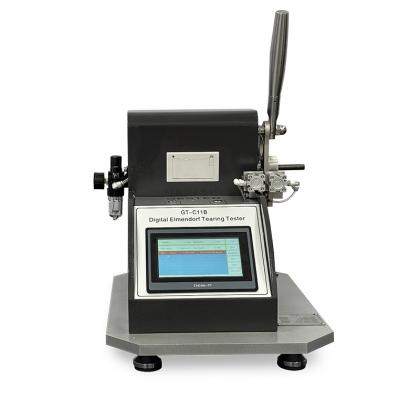
    A Guide to Selecting the Right Elmendorf Tear Tester Elmendorf tear testers are essential in material testing laboratories, quality control departments, packaging factories, textile mills and paper mills. Choosing the appropriate Elmendorf tear tester can be tough, as you might be confused about where to begin.Read this guide for a proper, thorough understanding of tester specifications, their performance, model selection, to match testers with your requirements.Let’s dive into it. Understanding Elmendorf Tear Tester This Digital Tearing Tester is designed for Elmendorf method tearing resistance test of textile, non-woven fabrics, paper, paper board, thin film, ventilation tape, metal sheet materials and etc. It features a microcomputer system with an advanced calculation method. The operation display combines a touch screen with PC control, allowing you to look up all the datum and statistical results in the mainframe freely. Tear testers, with automated functions, can greatly reduce manual operation intensity and improve testing accuracy. Core Specifications of Elmendorf Tear Testers The Elmendorf tear tester selection depends on several fundamental specifications. Tearing Force Range The tearing force range is the core indicator of the tester, which determines the types of materials it can test. Common ranges include 1600CN, 3200CN, 6400CN, 9600CN, 12800CN, suitable for materials with different tearing strength levels. Test Accuracy Test accuracy reflects the precision of the instrument. This tear tester offers an accuracy of ≤±1%F·S, ensuring reliable test data. Incision & Rip Parameters The incision length is fixed at 20±0.2mm, and the rip length is 43mm, which are standardized to meet consistent test requirements. Sample Clamping It adopts pneumatic clamp, which can fix samples firmly and avoid displacement during the test, ensuring test stability. Operation & Output Equipped with touch screen + PC control, it supports humanized operation with Chinese and English interfaces. It also has a printer for direct output of test reports. The tear test unit can automatically convert between N, gf, cN and lbs, suitable for different standards requirements. The unit also features an automatic sample cutting system, ensuring the same shape of notch and reducing operation strength. Which Elmendorf Tear Tester Is Right for You? There is a list of factors that involve choosing the right fabric tearing strength tester according to your requirement. Material Types to Be Tested First, clarify the materials you need to test. Different materials correspond to different tearing force ranges and test standards. Compliance with Test Standards It is essential to confirm that the tester supports the standards you must follow, including textile, paper, plastic and non-woven test standards. Tearing Force Range Requirements Select the matching tearing force range. Too small a range cannot test high-strength materials, while too large a range reduces test prec...
    View More
  • Vietnam Exhibition 2026: GESTER Showcases Leading Textile Testing Solutions
    Vietnam Exhibition 2026: GESTER Showcases Leading Textile Testing Solutions April 23, 2026
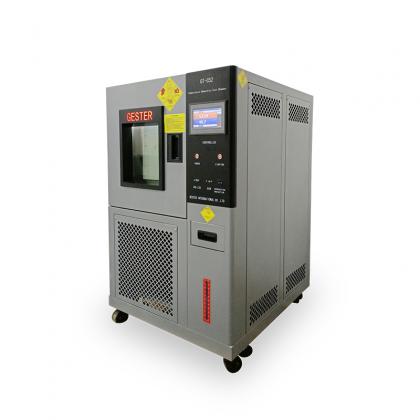
    Vietnam Exhibition 2026: GESTER Showcases Leading Textile Testing Solutions Vietnam Exhibition was held in Ho Chi Minh City, as the most influential textile industry exhibition in Southeast Asia, the show gathered enterprises and professionals from more than many countries and regions, focusing on the display and exchange of textile machinery, fabrics, accessories and testing equipment. At this exhibition, textile testing instruments have been set as an independent key category in the exhibition, which fully proves that testing instruments have become an indispensable key link in the textile industry chain and quality control system. The Trend of Textiles Testing Instrument Automated and precise testing system With the rapid development of textile production in Southeast Asia and the continuous improvement of quality control requirements, textile testing instruments are moving towards high automation, precision and standardization. GESTER's textile testing instruments adopt stable control systems and mature operation logic, which can realize efficient and accurate testing processes, effectively improving the operation efficiency of textile quality management systems. International standard In the global textile supply chain system, the consistency and traceability of test data are the key points for cooperation between brands and suppliers. GESTER's textile testing instruments are compatible with a variety of international standard systems such as AATCC, ISO, etc. Users can switch standard methods quickly with fewer operations, ensuring that test results meet the global standard system and can be recognized in most countries and regions. GESTER’s Booth and Star Instruments Attract Wide Attention GESTER brought a full range of professional textile testing instruments to the exhibition. The booth design fully conveys GESTER's brand advantages of focusing on professional, stable and user-friendly textile testing, attracting a large number of visitors, textile manufacturers, brand merchants and technical experts to visit, experience and negotiate cooperation. Besides the well-arranged booth, GESTER's four star textile testing equipment became the focus of the booth, showing the core features of Automatic, Reliable, and User-friendly to every visitor. AATCC Standards Electronic Crockmeter GT-D04 Electronic Crockmeter is used to determine the colour fastness of textiles to dry or wet rubbing.  Electric motor, fitted with a pre-determined electronic counter for strokes up to 9999, experiment complete successfully, automatic stop. Temperature and Humidity Climatic Test Chamber GT-C52 Temperature Humidity Test Chamber is for conditioning of samples prior to testing. It also can be used for a variety of materials of high - low temperature alternating test. The test temperature, humidity, time can be programmed. High quality appearance, Matte Line processing on the surface, and embedded and non-counteractive handle, easy operation, safe and reliab...
    View More
1 2 3 ... 22

A total of 22 pages

Leave A Message
If you are interested in our products and want to know more details,please leave a message here,we will reply you as soon as we can.

Home

Products

whatsapp