The Types of Zipper Testing Machines You Must Know
Here is something you need to know before we go deeper; zipper testing machines help verify the durability and performance of zippers widely used in apparel, luggage, outdoor supplies and other daily products.
The test performance may vary with the zipper specification, material and the type of zipper testing machine.
Zipper testing is a necessary process, especially for manufacturers and quality control teams in textile, luggage and garment industries. This article focuses on the common types of zipper testing machines to help you grasp their core functions and applications.
What are Zipper Testing Machines?
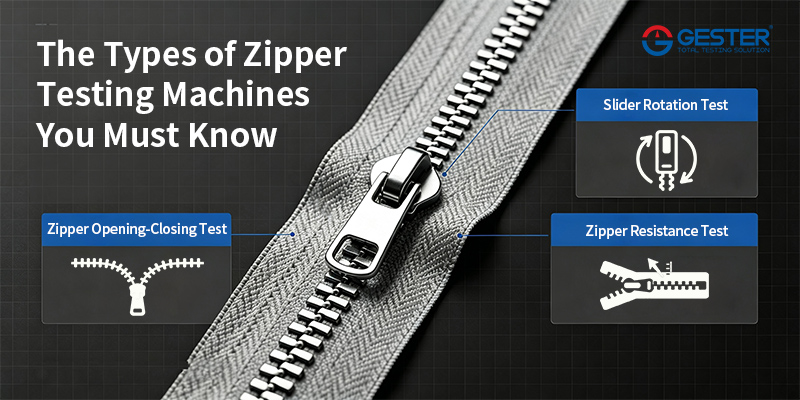
Zipper testing machines are precision laboratory instruments used to verify the mechanical performance and service life of zippers and zipper sliders. They simulate real‑use conditions such as repeated pulling, torsional stress and continuous operation to detect defects like joint separation, loosening, breakage, abrasion and fluffing.
There are two mainstream models for daily quality control:
-
GT‑C39A Zipper Fatigue Tester: For reciprocating durability and wear testing
-
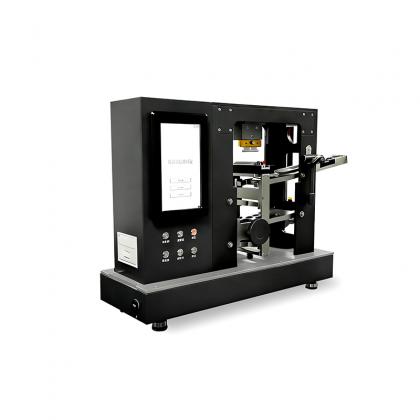
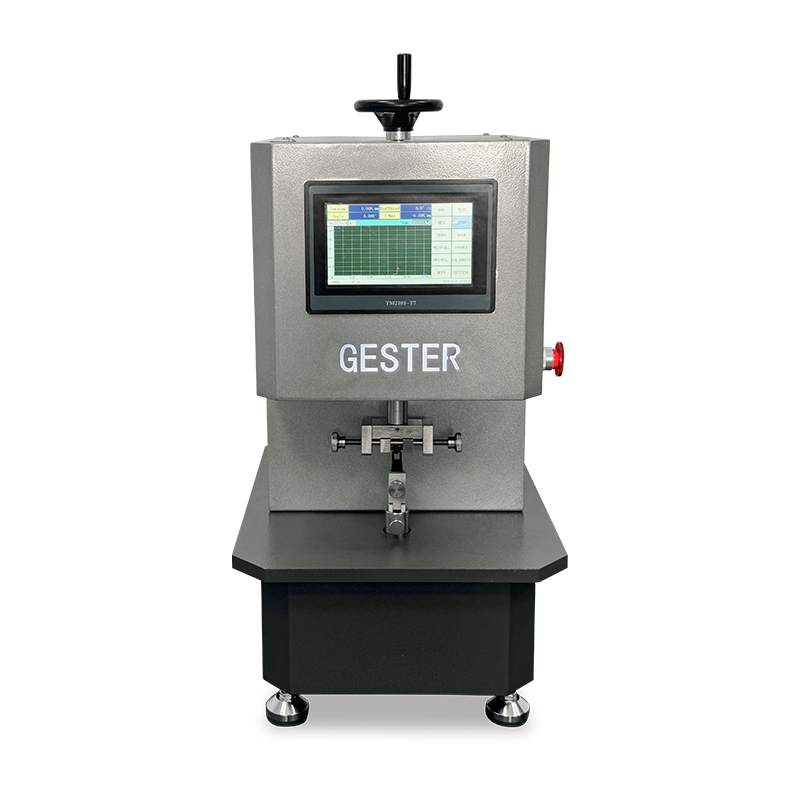
GT‑C39B Zipper Rotation Test Machine: For torsional strength testing of zipper sliders
Core Types of Zipper Testing Machines
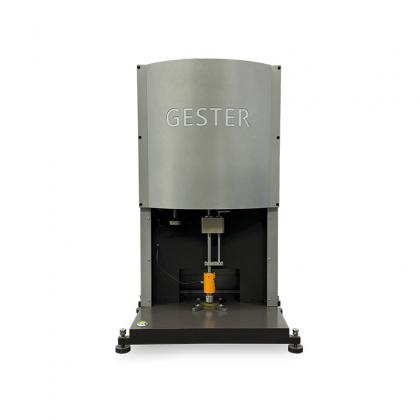
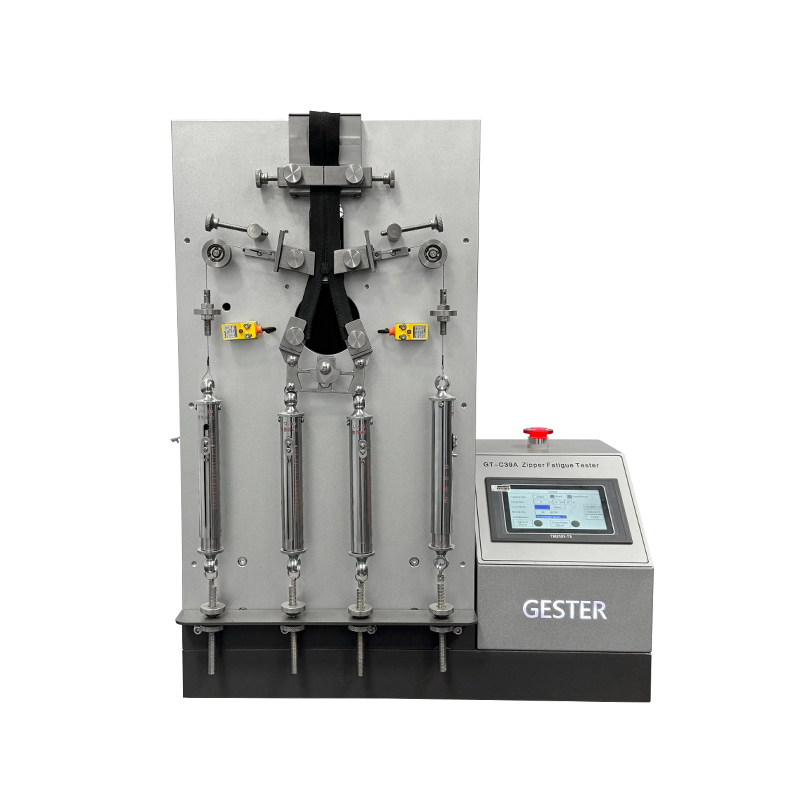
Zipper Fatigue Tester GT-C39A
This machine performs reciprocating pull tests on all kinds of zippers. Through continuous back‑and‑forth slider movement, it evaluates whether the zipper develops joint gaps, loosening, connector failure, fluffing or surface wear after long‑term use. It is the most widely used equipment for verifying zipper durability in mass production.
Applicable Standards: CNS -1083 , BS 3084 , QB/T2171, DIN 3419-1, DIN EN 16732, ASTM D2061, SATRA TM50 Method 2
Zipper Rotation Test Machine GT-C39B
This machine is specially designed to test the torsional strength of various zipper sliders. It supports three test modes: twist off, constant angle and constant load. It is mainly used to verify whether the slider body, pull tab and connection structure can withstand twisting forces without deformation or breakage.
Applicable Standards: ASTM D2061, 16CFR 1500.51-53, EN 16732
Operational Principles
GT-C39A Zipper Fatigue Tester
-
Compact and reasonable structure, easy to operate and maintain
-
Equipped with an automatic counting system; the machine stops automatically once the set test cycles are completed
-
Drives the zipper slider in stable, repeated linear motion to simulate actual daily use
GT-C39B Zipper Rotation Test Machine
-
Touch‑screen control with a straightforward interface for easy operation
-
Torsion fixtures made of stainless steel for durability and clean appearance
-
Low‑noise reducer for smooth, quiet running
-
Supports three test methods: twist off, constant angle, constant load
-
Torsion units can be switched between cN·m and N·m freely
Application of Zipper testing machine
Zipper Fatigue Tester GT-C39A is designed to determine the resistance to reciprocation of the zipper (slide fastener), such as a metallic zipper, coil zipper, nylon zipper, and plastic zipper.
Zipper Rotation Testing Machine GT-C39B is designed Used for metal, plastic, nylon zipper pull head and anti torsion test
Advantages of Zipper Test Equipment
GT-C39A Zipper Fatigue Tester
-
High test stability with consistent repeatability
-
Fully automatic operation reduces labor
-
Wide compatibility with most zipper types and sizes
-
Long service life with minimal maintenance
-
Fully compliant with major international standards
GT-C39B Zipper Rotation Testing Machine
-
Intuitive touch‑screen operation
-
Multi‑mode testing for flexible application
-
Low noise, stable running
-
Precise torsion measurement with unit switching
-
Stainless steel fixtures resist corrosion and deformation
Selection Criteria
For GT-C39A Zipper Fatigue Tester
-
Match your target testing standards (ASTM, EN, CNS, QB/T, etc.)
-
Confirm compatible zipper sizes and fixture types
-
Check counting range, test speed and stability
-
Choose models with automatic stop and high repeatability
-
Prefer structures designed for long‑term continuous use
For GT-C39B Zipper Rotation Test Machine
-
Verify torsion range and unit compatibility (cN·m / N·m)
-
Ensure support for your required test modes (twist off, constant angle, constant load)
-
Prioritize touch‑screen control for ease of use
-
Select stainless steel fixtures for durability
-
Confirm compliance with safety standards (especially 16CFR for children’s products)



 English