Brand:
GESTERItem NO.:
GT-KB05AOrder(MOQ):
1Payment:
T/T, L/CShipping Port:
Xiamen PortLead Time:
10-30 daysProduct Detail
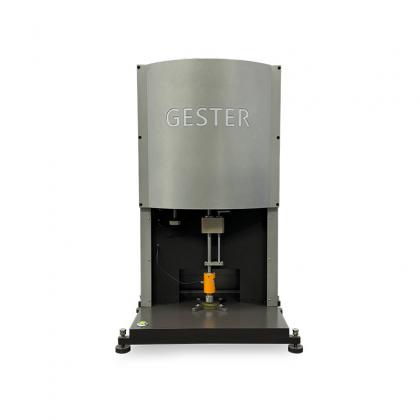
ROSS Flexing Tester GT-KB05A | Rubber & Sole Flex Fatigue Testing Machine
|
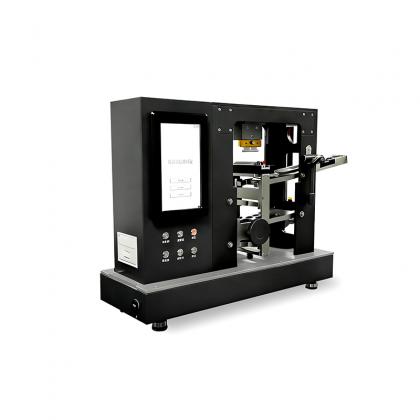
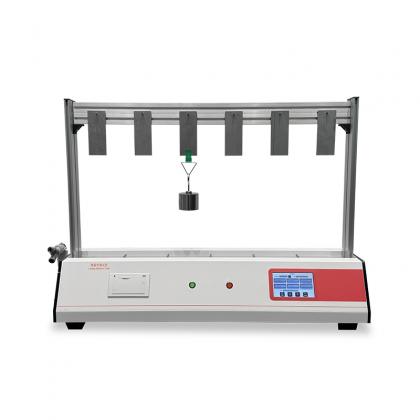
Application: ROSS Flexing Tester is uesd to determine rectangular bending test of rubber products, shoe soles, PU, PVC, TPR foam and other materials. And inspect its degree of damage, cracking and reduced decline by continuously stretch and bending. |

1. Body paint baking processed, easy for maintenance.
2. Fixture in aluminum material and surface processed with oxidation.
3. Ross flex tester equip with digital counter, automatically stop after test finished.
|
Model |
GT-KB05A |
|
|
Standards |
ASTM D1052 |
SATRA TM60, BS5131: 2.1, GB 20265, HG/T2411, ISO 5423, ISO4643, EN20344-2020 section 8.7, 8.8.4 |
|
Bending speed |
100± 3 cpm |
60± 5 cpm |
|
Specimen dimension |
152 * 25mm |
150±5 * 25±2mm |
|
Fixture |
6 sets, can test 12pcs samples |
|
|
Bending angle |
90±2° |
|
|
Winding shaft radius |
5± 0.3mm |
|
|
Counter |
LCD, 0~99,999,999 |
|
|
Dimension(W×D×H) |
80×42×45cm |
|
|
Weight (about) |
60 kg |
|
|
Power supply |
1∮AC 220V 50/60HZ 3A |
|
|
Standard accessories |
1pc |
Chisel cutter(2.5mm) for ASTM D1052 Test |
|
1pc |
Chisel cutter(2mm) for other standard test above mentioned |
|
|
1pc |
Power line |
Q1: How many samples can the GT-KB05A test in a single operation?
A: The GT-KB05A features 6 sets of heavy-duty aluminum fixtures. Each clamp set holds 2 specimens side-by-side, allowing operators to test up to 12 samples simultaneously, maximizing testing efficiency in high-volume footwear testing laboratories.
Q2: Why is a chisel cutter required before running a ROSS flex test?
A: According to standards such as ASTM D1052 and SATRA TM60, a small, precise incision (cut) must be made directly over the flexing axis using a specialized chisel cutter (2.5mm or 2.0mm). This pre-cut accelerates stress concentration and simulates a localized flaw, allowing engineers to quantitatively measure crack initiation, cut growth rate, and material fatigue resistance over time.
Q3: How do I select the right ROSS Flexing Tester based on test temperature and specimen type (cut strips vs. whole soles)?
A: Selection depends primarily on your test environment and whether sample destruction is permitted:
Standard Room Temperature (Material Strips): Choose GT-KB05A for testing standard 152X25mm rectangular cut specimens at ambient temperatures (~23°C) according to ASTM D1052 and SATRA TM60.
Extreme Cold Conditions (Winter / Outdoor Footwear): Choose Low Temperature ROSS Flexing Tester GT-KB05B, which incorporates a -40°C to 100°C thermal chamber to evaluate cold-embrittlement and freeze-cracking resistance for arctic and safety footwear.
Non-Destructive Whole Sole Testing: Choose Whole Sole ROSS Flexing Tester GT-KB05D if you need to evaluate complete, intact shoe soles directly without cutting them into strips, preserving the sole's structural flex pattern.
 Unsure which configuration fits your lab standards?
[Contact our application engineers today] for a customized testing solution, standard compliance advice, or an instant quotation!


Friendly Links :
 English